In my travels with cars, the first thing I encounter is the parking lot penalty, so I am very cautious, especially in the cities I visited for the first time. I searched for closed parking on the internet, but could not find it. City internet infrastructure is not as advanced as in Germany, it does not attract 4G at many points.
In Poznan, you buy tickets from the vending machines in the corners, leave them in your car and do not take a penalty, like in most European countries. In Poland, the currency is Zloti, the Euro does not pass everywhere, the vending machine also works with Zloty. During the return to Germany, I spent all the Zloty with me.
I had Euro cents with me, I tried them and did not accept them. It was also pointless for 1-2 hours to leave the car and exchange money, they could charge a penalty feel just at the moment I left the car. By a last chance, I inserted a Turkish lira into the vending machine, the vending machine worked unexpectedly :) By the way, even the Polish currency Zloty, which the Germans do not even call money, is worth more than the Turkish Lira.
The city is an easily navigable city. I spent 1-2 hours walking and taking photos in historic squares and narrow streets. It is really enjoyable to visit the city.
Street artists and shops selling tourist goods were everywhere. In addition, local shoemakers and millers also surprised me. Poznan seemed a little behind in time.
Although there was summer in the city center, there were not many foreign tourists. The region hosted more local tourists. I think this is because the Poznan-Lawica airport has no connection to many international destinations. No way this city has no direct flight from Turkey.
I did not come across Turkish tourist groups flowing naturally on the streets, here: D In the meantime, I saw 2 doner restaurants, one of them is Istanbul Döner. It is not surprising to me that the name of one of the shops is "İstanbul Döner" in all European destinations where there are few doner shops.
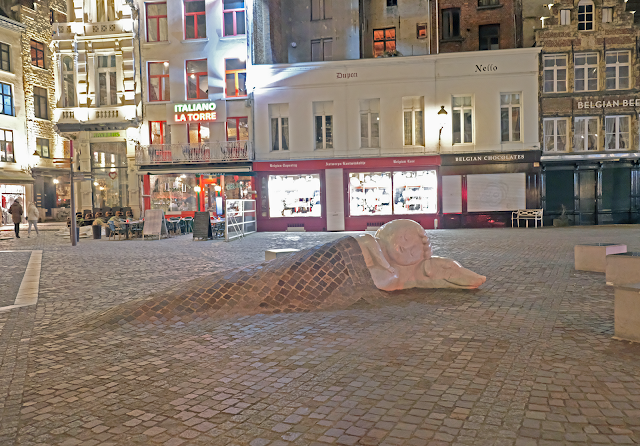
The most attractive square of the city is the point where the Public Market was established. Throughout the square, there were thin long row houses and pubs beneath them. And a large cathedral and sculptures. Here is a European city, even if its quantity varies, its qualities are the same.
The history of the square is parallel to the city's founding date: The city center and the square, which was established in 1253 on the left bank of the Varta river, are considered the third largest square in Poland today.
There were wooden buildings in the city center in the first period. However, after the big fire that surrounded almost the whole city in 1471, wooden structures were abandoned.
It has been replaced by brick buildings since the 13th century. With the 14th century, it started to be seen in the gothic architectural square. While the square, which witnessed many wars throughout history, was a bread market in the 17th century, it was used as a military station in the 18th century.
During the World War II, all houses were demolished and they were the ammunition center.
The rest of the unused buildings have been destroyed by heavy bombardment.
The post-war city was rebuilt, sticking to its pre-war historical architectural fabric.









Yorumlar